How Neon Signs Are Made: From Design to Delivery
Neon signs are made in two ways. Traditional glass neon is made by hand, bending heated glass tubing into shape, fitting electrodes, purging the tube, and filling it with neon or argon gas. LED neon is made by shaping flexible LED tubing and mounting it on a cut acrylic backboard wired to a low-voltage supply. One is an old craft, the other a modern build.
Echo Neon makes both, so this guide shows both processes honestly, side by side. If you are still deciding between the two formats, start with our guide to types of neon signs. For the wider picture, see our main neon signs guide. Here is how each one comes together, from design to delivery.

How Glass Neon Signs Are Made
Glass neon is made almost entirely by hand. A skilled tube bender shapes the glass, fits the electrodes, purges the tube, and fills it with gas. The steps below are the heart of the craft.
- Trace the design. The full-size design is drawn on a heat-resistant template. The letters are drawn as one continuous line, so the gas can flow from one end to the other.
- Bend the glass by hand. Lengths of glass tubing are heated over ribbon burners until they soften, then bent to follow the pattern. The bender blows through a hose to keep the tube from collapsing, and works by feel to judge when the glass is ready.
- Weld the sections. Longer designs are made in sections. The ends of two lengths are heated and fused together into one continuous piece.
- Fit the electrodes. An electrode is fused to each end of the shaped tube, with a small port left open for the next step.
- Bombard the tube. A high-current process heats the tube to burn off impurities from the glass and the electrodes, and draws a vacuum inside. Clean glass is what lets the sign last for years.
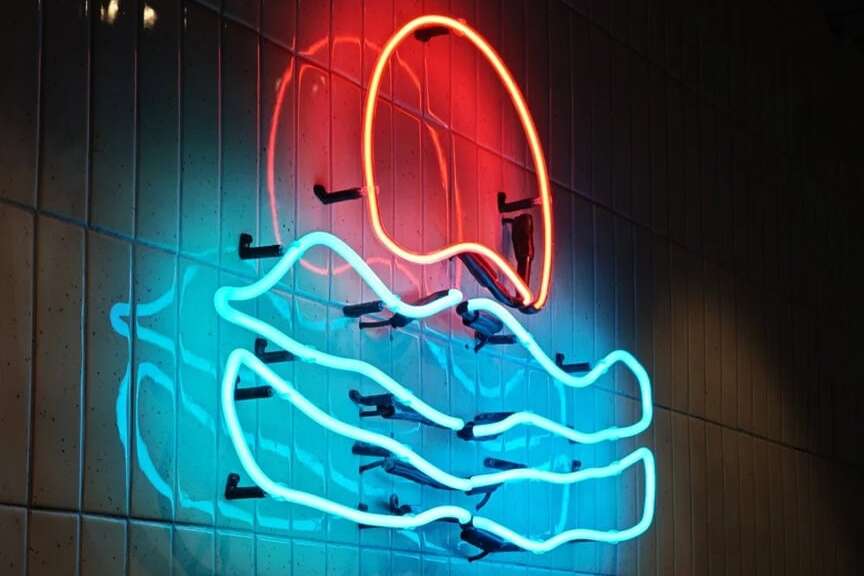
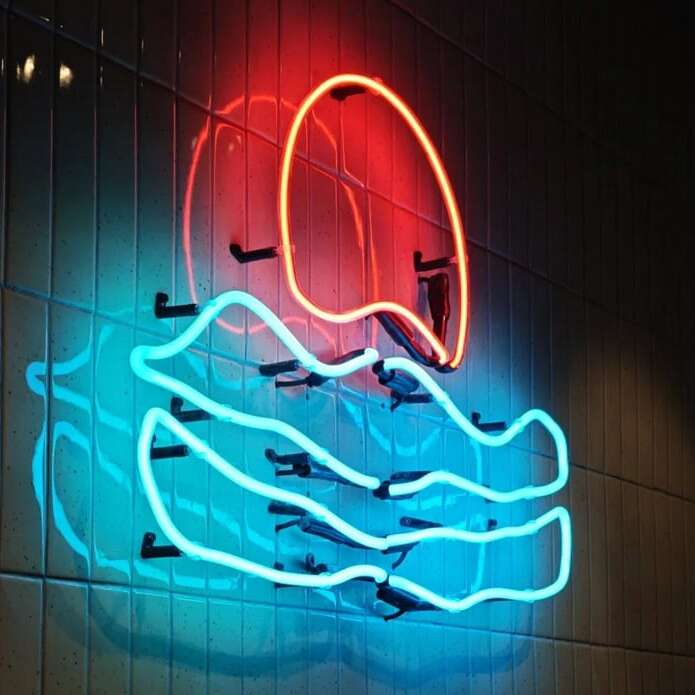
- Fill with gas. The air is removed and the tube is filled with neon or argon gas at low pressure, then sealed. Neon glows a warm red-orange, argon a cool blue.
- Block out the connectors. The connecting tubes between letters are painted over with opaque paint, so only the shapes you are meant to read light up.
- Age and test. The finished tube is lit at high voltage to settle the gas and check that every section glows evenly.
- Mount and wire. The tube is mounted on a backing and the electrodes are wired to a transformer. The sign is ready to light.
That is the overview. For the full, step-by-step look at the craft, see how glass neon signs are made.
How LED Neon Signs Are Made
LED neon recreates the same glowing line with a faster, modern build. There is no gas and no high-voltage transformer.
- Prepare the design. Your text or logo is set as a digital pattern that guides the shape of the sign.
- Shape the LED flex. Flexible LED tubing is cut and bent to follow the design. The silicone tube diffuses the LED light into an even line.
- Mount on the backboard. The flex is fixed to a laser-cut acrylic backboard, cut to the shape of the design or left as a clear rectangle.
- Wire the power. The sign is wired to a low-voltage 12V power adapter that plugs into a standard outlet. No transformer, no gas.
- Test and pack. The sign is lit and checked, then packed with pre-drilled mounting holes and hardware, ready to hang.
LED is quicker to make and easier to repeat than glass, which is part of why it costs less. For the full build, see how LED neon signs are made.
The Craft Behind Glass Neon
Bending glass neon has been called writing without lifting the pen. A single letter often doubles back on itself, and the bender has to render in three dimensions what you read in two. The glass is shaped while it is hot and soft, by hand, with the bender judging the heat by feel. It takes years of practice to do it well, and no two pieces come out exactly alike.
That is what you are paying for in a glass sign: hours of skilled hand work, not a printed part. You can see our work in both glass and LED, or design a custom glass neon sign if you want an original made by hand.
How Neon Signs Get Their Colors
In glass neon, color comes from three things: the gas, the glass, and the coating. Neon gas glows red-orange, and argon glows blue. Tubes made from colored glass, or coated on the inside with phosphor powders, expand that into a wide range of colors. The color you see is the combination of the gas inside and the tube around it.
LED neon works differently. The color comes from the LEDs themselves, which is why LED offers a wider range of set colors and color-changing RGB options. Either way, the color is chosen at the design stage.
Installing and Caring for a Neon Sign
Most neon signs are made to hang easily. They come pre-drilled, and an LED sign plugs into a standard outlet while a glass sign connects through its transformer. For the full steps, see how to install a neon sign.
Care is simple. Keep the sign dust-free and handle it gently, especially glass. For what to do over the long run, see neon sign maintenance and care.
If you own a traditional glass sign, our glass neon installation and troubleshooting guide covers mounting with or without a backboard, diagnosing common problems, and replacing a damaged glass tube..
A Short History of Neon Signs
Neon light was first shown by the French inventor Georges Claude in Paris in 1910, and neon signs spread quickly through the 1920s, becoming a fixture of storefronts and city streets through the mid-century. The hand-bending craft used today is essentially the same one developed back then. For the full story, see the history of neon signs.
Have a Custom Sign Made
Knowing how a sign is made is half the fun of having one made for you. Design a custom glass neon sign for a handmade original with an authentic gas-light glow, or build a custom LED neon sign for the lighter, lower-cost modern version. Either way, you choose the text, font, color, and size, and we make it.
Frequently Asked Questions
Neon signs are made two ways. Glass neon is hand-bent glass tubing fitted with electrodes and filled with neon or argon gas. LED neon is flexible LED tubing shaped and mounted on an acrylic backboard, wired to a low-voltage supply.
A tube bender heats lengths of glass tubing over a flame until they soften, then bends them by hand to follow a traced pattern, blowing through a hose to keep the tube open. It takes years of practice to do well.
Glass neon signs are filled with neon gas, which glows red-orange, or argon, which glows blue. Colored glass and phosphor coatings expand the range of colors. The name comes from neon, the first gas used.
Flexible LED tubing is shaped to the design, mounted on a laser-cut acrylic backboard, and wired to a 12V power adapter. There is no gas and no transformer, so LED is faster to make than glass.
Glass neon is handmade, bent tube by tube by a skilled artisan, which is part of why it costs more than LED. LED signs are assembled by hand too, but the process is faster and easier to repeat. See how much neon signs cost for how that affects price.
Because glass neon is one continuous tube, there are connecting sections between the letters. Those are painted over with opaque blockout paint so only the shapes you are meant to read appear to light up.
A custom sign takes time to design and build, especially glass, which is shaped and finished by hand. Allowing a few weeks from design to delivery avoids a rush.
From Design to Delivery
There are two ways to make a neon sign. Glass neon is an old hand craft: heated tubing bent by feel, filled with gas, and finished tube by tube. LED neon is a modern build: flexible tubing on an acrylic backboard, running on low voltage. Echo Neon makes both, so you can choose the original or the modern version with a clear idea of what goes into each.
When you are ready to have one made, start with your design. For the rest of the picture, head back to the main neon signs guide.